
Wanting to step into your garden every day with joy, without spending every weekend on weeding and mowing, is perfectly reasonable. By putting some thought into the initial design and choices, you can create a beautiful garden without spending all your energy on maintenance.
1. Rethinking the Lawn: Not a Necessary Option
Traditional large lawns are actually one of the most time-consuming and energy-intensive elements. If you don’t like pushing a lawnmower around the yard, consider using wooden decks, gravel paving, or a combination of paved surfaces and flower beds to replace part or even all of the lawn area.
- Small, accent lawns are more suitable for relaxation and viewing, rather than taking up the entire yard.
- For small homes or urban gardens, using patios and container plants to create outdoor space is also a more economical option.
2. “Right Plant, Right Location”: Choosing the right plant from the start is much easier than trying to fix it later.
The same plant can look drastically different in the right or wrong location. Plants that prefer dry, well-drained soil (like lavender) will struggle to thrive if planted in waterlogged soil.
- First, determine whether your soil is dry, wet, acidic, or alkaline, then choose a variety that is adaptable to the corresponding environment.
- Sunlight, wind direction, and the surrounding environment should also be considered to avoid the repeated stress of “forced cultivation.”
Properly matching the environment and plants is the foundation of a low-maintenance garden.
3. The Bigger the Container, the Easier it Is: Use Larger Pots Instead of Small Pots
Smaller potted plants aren’t necessarily cuter, but the maintenance intensity will definitely increase with smaller size. Small pots have less soil, dry out faster, and require more frequent watering; larger pots or elevated planters can retain moisture and nutrients more stably.
- Planting a few large pots together is easier to manage than scattering mini pots all over the ground.
- For balconies or paved patios without soil, large containers are a great tool for consolidating space and reducing workload.
4. Less is More: Visual Enhancement Through Variety Reduction
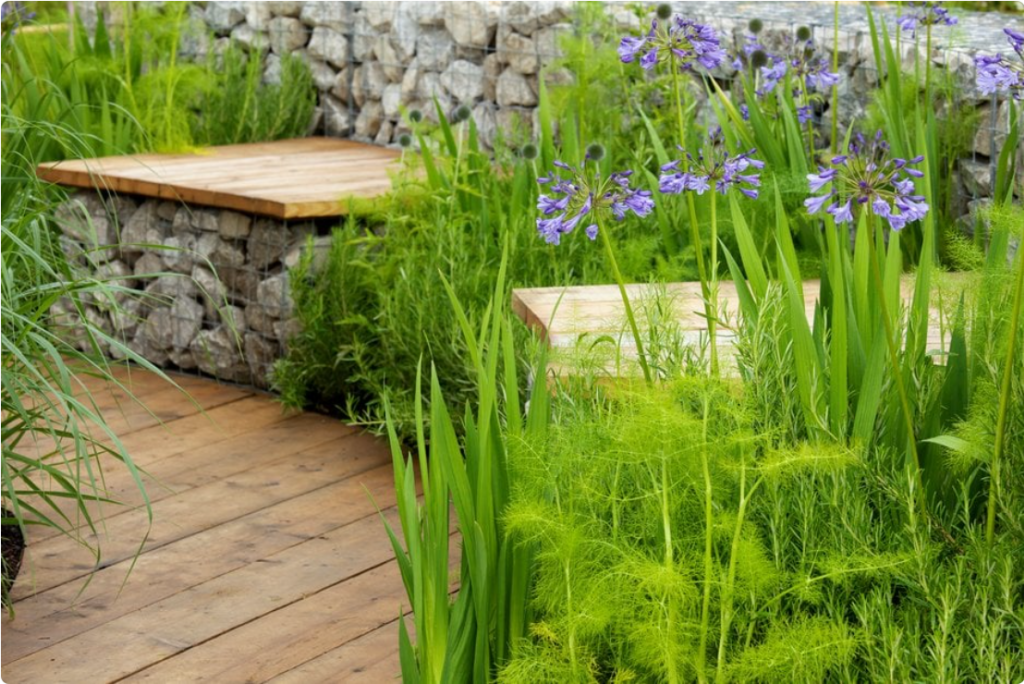
The more diverse your garden, the more difficult it is to maintain and select plants. Conversely, simplifying the variety and using “a few varieties + large areas of repetition” often creates a more striking visual effect.
- For example, plant a considerable number of the same flower (or a small combination) along paths or in flower beds.
- Use color or texture contrasts (such as silver leaves + bronze-colored herbs) to add depth, rather than simply increasing the variety.
Such gardens are easier to maintain and have a more cohesive and well-designed feel.
5. Durable Combinations: Combinations That Stand the Test of Time
To reduce the need for “seasonal changes,” prioritize combinations with long-term aesthetic value when creating your garden. For example: Combining evergreen conifers, foliage shrubs, and ground cover herbs ensures the composition remains structured and colorful even after the leaves fall.
- Use different leaf shapes and textures in the composition: Pair light, slender ornamental grasses with rounded, glossy leaves.
- Construct flower beds using a “base plant + filler plant” approach, rather than relying entirely on annuals.
The advantage of this approach is that once established, frequent large-scale replanting is unnecessary.
6. Trust “Reliable Players”: Utilize Authoritative Certifications
For inexperienced gardeners, selecting plant varieties is a complex matter. In this case, it’s helpful to utilize evaluations from professional organizations, such as the RHS “Award of Garden Merit (AGM)” mark, which indicates that the variety performs consistently and reliably under typical garden conditions.
- AGM covers a wide range of plants, from trees and shrubs to flowers and fruits and vegetables, meeting almost all garden needs.
- Prioritizing proven varieties can significantly reduce the frustration of short-lived lawns and the likelihood of rework.
7. Making Lawns Easier to Mow: Smooth Shapes and Edges
If you still retain some lawn, you can greatly reduce maintenance by fine-tuning the shape.
- Use brick or sunken gravel strips as hard edges to avoid having to trim around the edges after each mowing.
- Avoid sharp corners and complex curves; shape the lawn into relatively simple geometric shapes for easier clipper movement.
The lawn will no longer be a “troublemaker,” but a neat, clean, and easy-to-maintain backdrop.
8. Upward Growth: Utilize Self-Climbing Plants
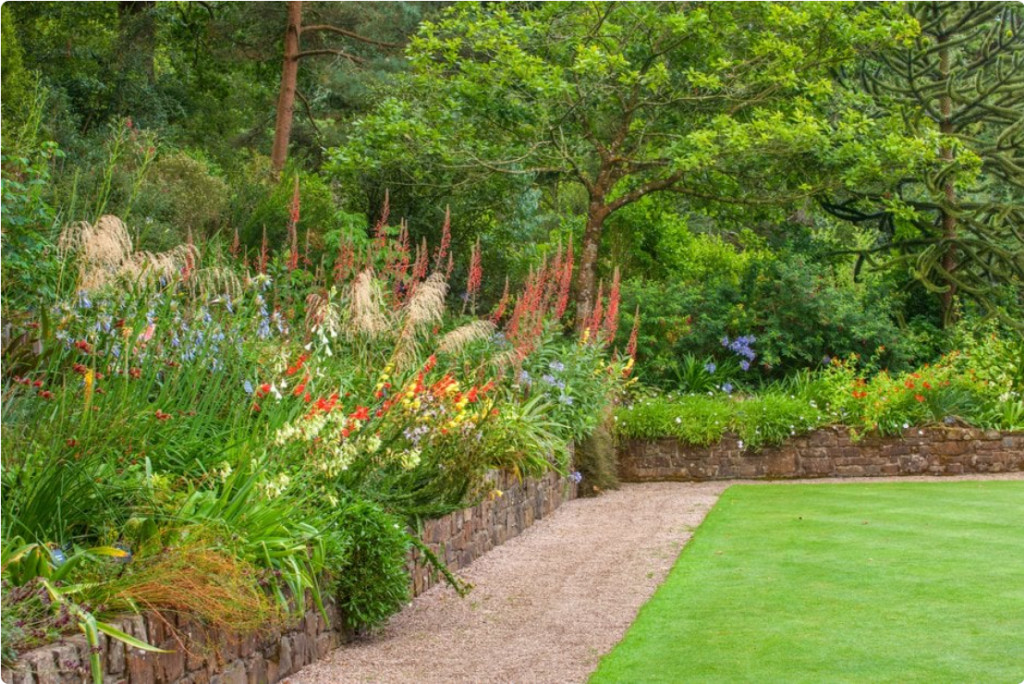
Walls, fences, and even old tree trunks can be utilized as “vertical land.” Self-adhesive climbing plants (such as ivy, Virginia creeper, and climbing hydrangeas) can grow upwards close to the surface without relying on wire or netting.
- Pre-paint or prepare the walls or fences, then cover them with climbing plants for a three-dimensional and long-lasting effect.
- Compared to ground-level flower beds, the same amount of greenery in vertical spaces often saves more area and reduces weeding and soil turning.
As long as the varieties and scope are well controlled, vertical greening is a highly cost-effective component of a low-maintenance garden.
9. Mulching: A One-Step Solution for Less Watering and Weeding
Bare soil is the easiest place for weed seeds to take over and for water to evaporate. By laying mulch (such as bark, gravel, or pebbles), weed germination can be inhibited, water evaporation slowed, and the overall appearance more complete.
- Leave space for plant growth in newly planted flower beds, and cover the remaining areas with mulch to significantly reduce the frequency of weeding later.
- When used in conjunction with ground cover plants, it forms a stable, low-maintenance “living mulch layer.”
10. Allow for Imperfection: Make Peace with Nature
A truly relaxing garden is never a spotless, sharply defined showroom. Small flowers growing between paving stones, the occasional fallen leaf, and slightly haphazardly growing clumps at the edges all bring life to the space.
- From the initial design stage, reserve space for “small wildness,” rather than fighting it afterward.
- Let go of the obsession with absolute tidiness and instead enjoy the rhythm of light and shadow, the sound of the wind, and the natural growth of plants.
When you stop seeing every fallen leaf as “out of control” and instead consider them part of the picture, the garden truly transforms from an energy-consuming project into an everyday landscape that allows for relaxation.