
A perfectly grown indoor plant always catches the eye—and propagation is the process of subtly “copying” that fondness. For beginners, mastering a few simple methods is enough to gradually bring life to your windowsill and desk.
1. Water Rooting: The Most Intuitive and Rewarding Beginning
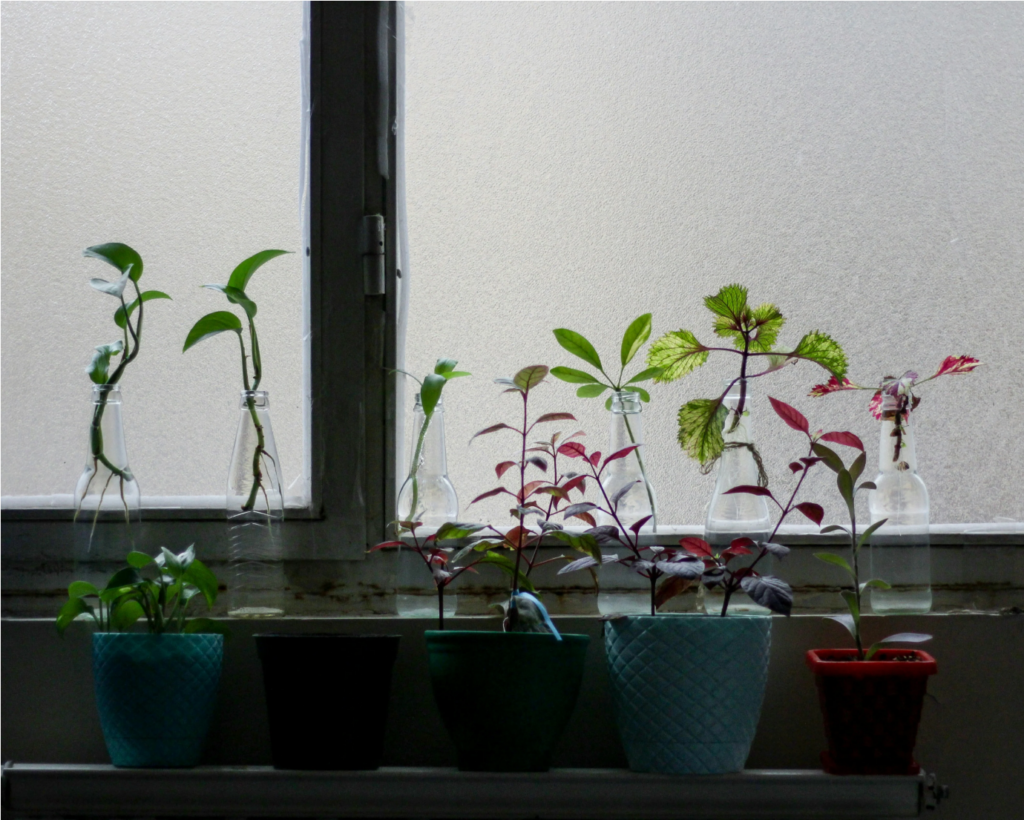
Insert a cut stem into a clear glass and watch the roots slowly unfold in the water—this is many people’s first step into the world of plants.
- The key is to ensure the cut has a node—the small bulge where the leaf connects to the stem; new roots often grow from here.
- Fill the glass only up to submerge the node, change the water regularly, and avoid cloudiness and odors.
Plants like Philodendron, Epipremnum aureum, and Tradescantia pallida, with their supple stems and vigorous growth, are almost effortlessly propagated in water. Some brightly colored cultivars can even display captivating foliage during the rooting stage, making the wait less tedious.
2. Direct Potting: Seamless Transition in Soil
Instead of rooting in water first and then transplanting, some people prefer to let the cuttings root directly in the potting soil, skipping the intermediate relocation process.
- Choose loose, well-draining potting soil. Gently insert the lower end of the cutting and keep the substrate slightly moist.
- If you have rooting powder on hand, you can apply a small amount to the cut end to accelerate healing and root growth—not essential, but it will shorten the waiting time.
Plants like Spider Plants and Small African Violets, which are already adapted to potted environments, often recover quickly in this way; for beginners, their “forgiveness” is sufficient to accommodate minor operational errors.
3. Division: From One Lush Pot to Several New Plants
Many indoor foliage plants are actually composed of multiple “clumps,” just planted in the same pot, appearing as a single clump.
- Carefully remove the entire plant from its container, gently shaking off some of the old soil.
- Following the natural growth boundary, slowly tear or cut the root ball apart, ensuring each portion has a complete root system and at least one healthy new shoot.
Peace lilies, snake plants, and similar plants are well-suited for division to rejuvenate their appearance: the “crowdedness” of the old pot is relieved, and you unexpectedly gain several new plants that can be placed in different rooms or shared with friends.
4. Leaves as a Starting Point: From One Leaf to an Entire Plant
Some plants don’t even need branches; a single leaf is enough to begin a new life cycle.
- Remove healthy, mature leaves. Some need to be inserted into the soil along with their petioles, while others require cutting the leaves into small sections, ensuring each section is in contact with the substrate.
- Over time, small new buds will sprout near the base of the leaf, eventually developing into independent plantlets.
Many begonia varieties and some African violets are well-suited to this method: their leaves are already richly colored, enough to make the potted plant look vibrant even before new buds appear.
5. Air Layering: “Targeted Replication” for Large Plants
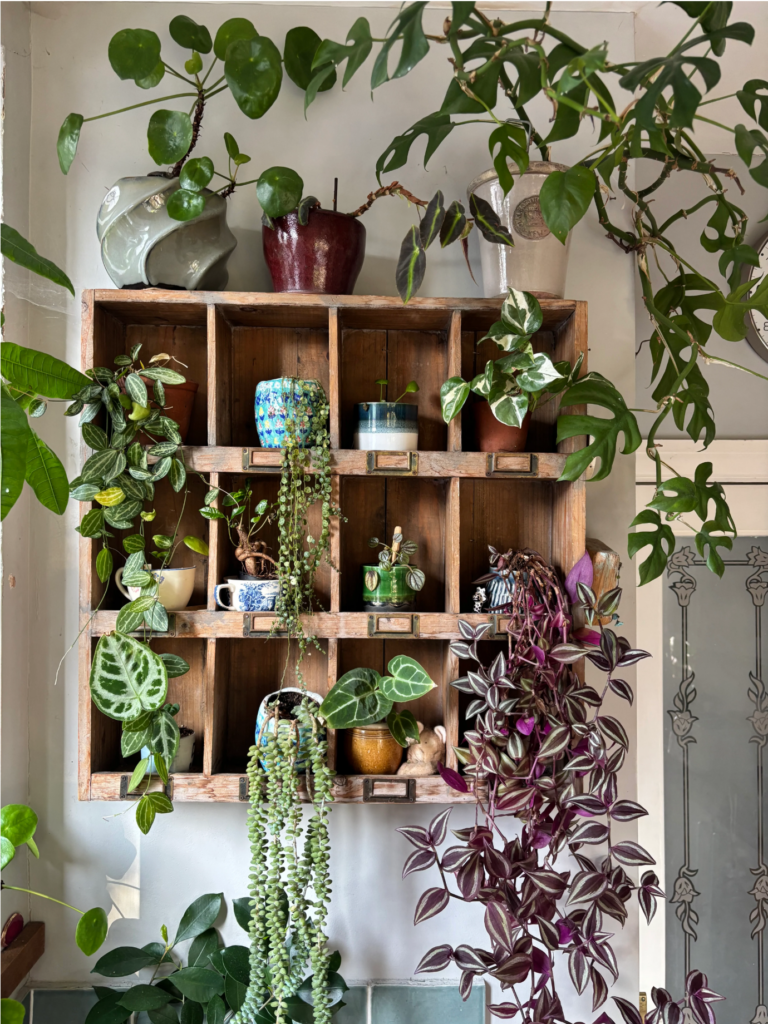
When an indoor plant has grown into a “giant” in the living room, abruptly cutting it back to its original size can be risky. In this case, the gentler air layering method can be used.
- Gently make a small incision in the selected stem to expose the inner tissue.
- Wrap the wound with moist sphagnum moss, then seal it with a thin film or bandage to maintain local humidity.
- Once a clump of new roots has grown firmly from the wrapped area, cut it off below the root ball and plant the upper part, along with the new roots, into a new pot.
For plants like Monstera deliciosa and Ficus elastica, which have a certain height and clearly defined branches, this method yields a new potted plant with a complete shape without causing the original plant to suddenly become “bald,” resulting in a gentler transition.
6. Suitable “Practice Partners” for Beginners
If you are just starting out with propagation, prioritize varieties with strong recovery and quick feedback:
- Suitable for hydroponics or cuttings: Vinous plants like Epipremnum aureum and Tradescantia pallida.
- Suitable for division: Clump-forming plants like Spider Plant, Lily of the Valley, and Sansevieria trifasciata.
- Suitable for leaf cuttings: Begonia ‘Variegata’ and some African Violets.
- Suitable for air layering: Monstera deliciosa, Ficus elastica, and other large foliage plants with thick stems.
These plants are often willing to “give them a few more chances”: imperfect cuts or a longer rooting time won’t immediately signify failure, making them ideal for building experience and confidence.
7. Establishing More Delicate Connections Between Branches and Leaves
The joy of propagation isn’t just about “having another pot,” but about beginning to understand a plant’s structure: where the nodes are, where energy is stored, and where it’s time to prune.
When a branch sprouts its first fine root in clear water, when a new bud quietly swells on the edge of a leaf, you’ll find that growing plants suddenly becomes incredibly concrete—life is no longer just about “how well it looks,” but something that can be gently continued, shared, and enjoyed with more people.