
In the world of flowers, florists and flower growers are not simply buyers and sellers, but rather partners working side-by-side: one sculpts the seasons in the soil, the other shapes emotions in vases. They complement each other, making it possible for flowers to truly “bloom as promised” at weddings, commercial events, or everyday bouquets.
1. Understanding the Florist’s True “Core Task”
From a business perspective, a florist’s most important responsibility can be summed up in one sentence: to complete the artwork and on-site arrangement entrusted to them by their clients.
- For some clients, this means an art installation filled with local seasonal flowers.
- For others, it might simply be “to make the same perfectly round bridal bouquet as the reference image,” where the use of local flowers is less important.
Therefore, for small-scale florists, establishing a stable partnership with a florist requires accepting a fundamental premise: you’re not providing “flowers you really want to grow,” but rather flowers that help them fulfill their contracts—reliable inventory, matching style, and quality that can withstand their on-site scrutiny.
2. First, understand: Whom can you “serve”?
Before entering a floral design studio, florists shouldn’t be pushing sales, but rather researching and assessing.
1. Judging “Suitability” Through Their Portfolio
Through a florist’s website and social media, you can roughly discern their business structure and aesthetic preferences:
- If their work features a large number of wholesale flowers like carnations, roses, and ping-pong chrysanthemums, and the designs are uniform and standardized, it indicates a high reliance on the stable supply and pricing system of the wholesale market. Switching to local flowers on a large scale would be quite difficult. – If your work frequently features unique flowers like chocolate cosmos, rare-colored lisianthus, protea, and poppies, it indicates a strong preference for “uniqueness” and “seasonality,” making them more likely to reserve space for novel local flowers.
2. Clarify Your “Product Structure”
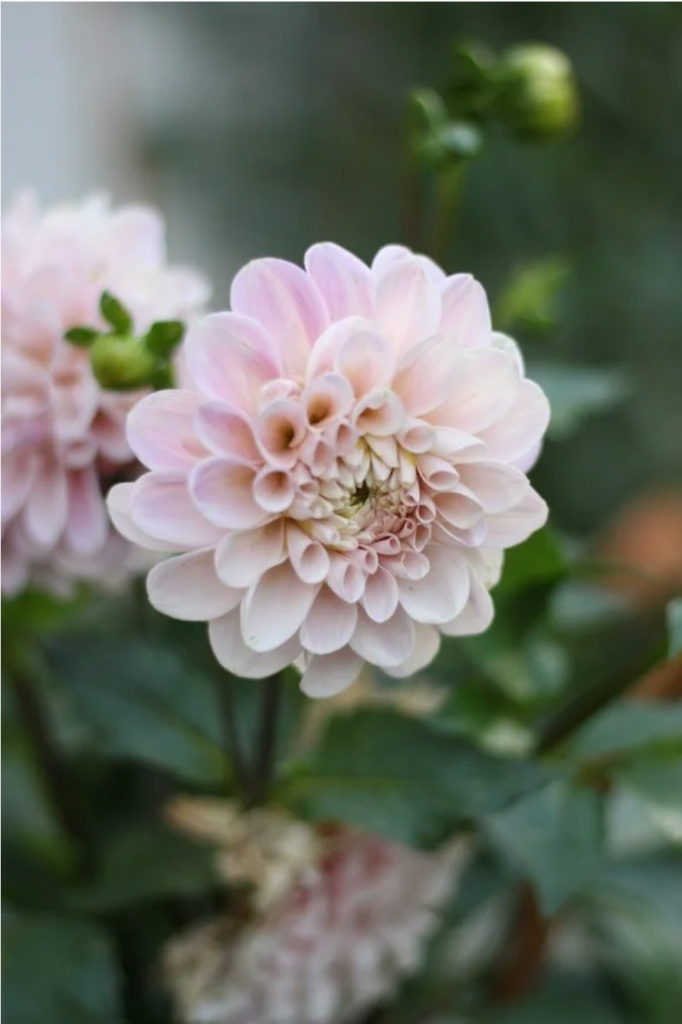
Equally important is reflecting on what you can offer:
- A stable supply of large quantities of “main flowers”?
- Or a small quantity of rare “special accents”?
- Or seasonal branches and foliage that are difficult to find in wholesale markets?
When you can clearly articulate your position, subsequent collaborations become easier: you’re not bringing a bucket of nameless flowers, but a clear and reliable “floral solution.”
3. Relationships are never “sold,” but built gradually.
Break in to a studio with a bucket of flowers; it’s unlikely to build trust, and more often than not, it will only create wariness.
1. Be a good person first, then talk business.
Instead of rushing into discussing prices, start by explaining your identity and motivation. For example: “You’re a local small-scale florist hoping to incorporate more local flowers into your floral arrangements. We’d like to explore the possibility of a long-term collaboration.”
This type of opening is sincere, direct, and avoids putting pressure on the other party. Genuine partnerships are built through multiple short, comfortable interactions, not by presenting a price list on the first meeting.
2. Trust comes from consistent performance.
In the eyes of the other party, trustworthiness usually includes three things:
- The promised varieties and colors do not deviate from the specifications upon delivery.
- The promised quantity is delivered on time and in full.
- Problems are communicated in advance, rather than being canceled at the last minute.
A small mistake might be forgiven, but repeated discrepancies will directly sever any possibility of cooperation. Therefore, it’s better to promise less than to readily say, “It’s definitely no problem.”
4. Expanding from a Single Variety to a Whole Collaborative Space
When a particular flower receives rave reviews from a florist, the florist gains the opportunity to expand outwards.
- If someone particularly favors your white zinnias, you can look for similar-colored white dahlias, white globe amaranths, or mint leaves with white stripes in the field.
- When someone is preparing for their next wedding, you can casually ask, “Do you need any more white decorations? We currently have some white flowers and white-green foliage in the field that might suit your current style.”
This approach isn’t aggressive salesmanship, but rather a targeted “recommendation of adjacent options”: your role in the field is like a recommendation system more sophisticated than a computer algorithm, remembering the customer’s preferences and understanding what the season offers.
5. Appearing When the Customer is Most Anxious
The floral industry has one ever-present variable: unplanned shortages and weather.
When wholesale markets experience temporary stockouts, or a particular flower spoils during transport, a local florist with remaining stock often becomes the “firefighter”:
- Sometimes, you might not be able to provide the specific variety they want.
- But sometimes, you happen to have alternative colors or patterns, and can even cut and deliver them that same evening.
A single act of support at a crucial moment often leaves a lasting impression: On the outskirts of the city, there exists a field that can save a wedding in a pinch. This kind of memory carries far more weight than any advertisement.
6. Growing Together, Not Depleting Each Other
As trust builds, collaboration transforms from “occasional purchasing” to “advance planning.”
- Florists will be willing to share the next season’s wedding color scheme and main visual in advance.
- Florists can then adjust planting and seedling selection based on this information, ensuring the flowers in the field better meet actual needs.
Over time, your relationship evolves from a simple supplier-supplier dynamic into a long-term partnership of mutual trust: the florist’s work reflects your four seasons, and your accounts show a stable and increasingly robust income curve.
7. A Letter to Florists Taking Their First Steps
Building a partnership with a florist isn’t about a perfect email, but about time, understanding, and consistent professionalism.
- First, understand the pressures florists face when fulfilling contracts.
- Then, clarify which part of those pressures you can offer.
- Through repeated punctual, reliable, and trustworthy deliveries, let “friendship” gradually solidify into “trust.”
When you find yourself almost overwhelmed by orders from various studios, it means that this partnership, which began as strangers, has quietly grown into a solid network of relationships and business connections—and you are standing in the center of the flower field, gently supported by these relationships.